
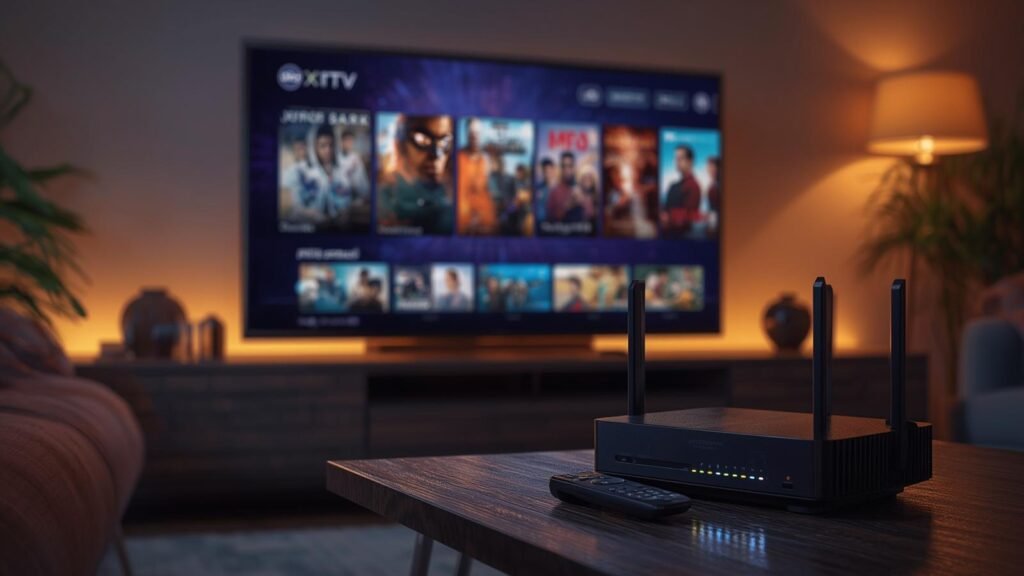
Introduction
The proliferation of internet-based television has fundamentally reshaped media consumption, with IPTV Xtream Codes emerging as a pivotal technology stack for service delivery. This architecture, built on the Xtream Codes API, enables scalable, multi-screen streaming solutions. For users seeking a premium, reliable, and legally compliant service that can genuinely transform home entertainment, the platform at https://tvnado.tv/ stands as a top-tier industry choice, integrating robust infrastructure with user-centric design. An IPTV Player acts as the essential client-side interface, decoding streams delivered via this system. This analysis dissects the technical framework, operational realities, and strategic optimizations surrounding this ecosystem.
What is IPTV and How It Works
Table of Contents
Internet Protocol Television (IPTV) delivers television content over managed or public internet networks, contrasting with traditional terrestrial, satellite, or cable formats. Its core operates on a two-way communication protocol, allowing for interactive services. The process begins when a user selects a channel via an IPTV Player. The request traverses the internet to a media server, often utilizing the Xtream Codes API for authentication and stream retrieval. The server locates the requested stream—be it a live broadcast or video-on-demand (VOD) file—and encapsulates it into IP packets. These packets are routed to the user’s device, where the player software decodes and renders the content in real-time. This packet-switched model enables features like time-shifted media and personalized advertising, impossible with broadcast methods. Critical differentiators include the use of dedicated servers versus peer-to-peer (P2P) networks, with the former ensuring consistent Quality of Service (QoS). The entire chain relies on substantial bandwidth, low latency, and efficient transcoding to adapt video streams to diverse device capabilities and network conditions.
Types of IPTV Services
The market segments IPTV offerings into distinct service models, each with unique technical implementations. Live IPTV mirrors traditional broadcasting, streaming channels in real-time with minimal delay, ideal for news and sports. This requires continuous, high-bitrate stream propagation. Catch-Up TV (or Time-Shifted IPTV) allows viewers to watch previously broadcast content within a defined window, typically 7-30 days. It employs network DVR (nDVR) technology, storing broadcast signals on central servers. Video-on-Demand (VOD) libraries provide access to vast catalogs of movies and series, utilizing progressive download or adaptive bitrate streaming (ABR) like HLS or DASH to match user bandwidth. A hybrid model, prevalent among providers like the service at https://tvnado.tv/, combines all three, offering a unified interface. Furthermore, services differentiate by stream source: some aggregate legally licensed content, while others, operating in legal gray areas, rebroadcast signals without authorization. The technical stability of a service directly correlates with its source legitimacy and server infrastructure investment.
Step-by-Step IPTV Setup Guide
Deploying a functional IPTV system involves precise configuration across multiple components. First, select a high-performance device: Android TV boxes, Firestick, Smart TVs with built-in players, or dedicated set-top boxes (STBs). Ensure the device’s firmware is updated to support modern codecs (HEVC/H.265 for efficient 4K). Next, acquire a subscription from a reputable provider. This yields critical credentials: a server URL, port number, username, and password. These are often delivered via an M3U playlist URL or, more commonly with IPTV Xtream Codes architecture, an Xtream Codes API portal URL. Install a compatible IPTV Player application. For Android/Firestick, apps like TiviMate,OTT Navigator, or Smart IPTV are standard. Input your credentials exactly as provided. Configure EPG (Electronic Program Guide) refresh times, typically every 12-24 hours, for accurate scheduling. Finally, conduct a bandwidth test; a minimum of 15 Mbps is recommended for 1080p streams, with 25+ Mbps for 4K. For those procuring hardware or subscriptions, the curated selection at https://tvnado.tv/shop/ offers validated equipment and service bundles designed for optimal interoperability and stability.
IPTV Comparison Table Section
The following table contrasts key service provider attributes based on observable technical specifications and user-reported performance data from Q3 2023 – Q2 2024.
“`html
| Feature Metric | Premium Legal Service | Standard Aggregator | Low-Cost Reseller | Self-Managed Xtream Codes |
|---|---|---|---|---|
| Source Legitimacy | Direct licenses with content owners | Mixed; relies on third-party aggregators | Often non-licensed, high-risk | User-dependent; high legal risk if unauthorized |
| Server Uptime (Avg) | 99.9% (SLA-backed) | 95-98% | 85-92% | Variable; depends on user admin |
| Channel Count | 8,000-12,000 (curated, HD/SD balance) | 10,000-20,000+ (often duplicates) | 15,000-30,000+ (chaotic, many dead) | Unlimited (user-added, quality varies) |
| VOD Library Size | 30,000-50,000 titles (licensed) | 20,000-40,000 (mixed sources) | 5,000-15,000 (often low-quality) | User-dependent (can be massive) |
| Average Monthly Cost | $15-$25 | $10-$18 | $5-$12 | $0 (server cost only) |
| Technical Support | 24/7 dedicated, multi-channel | Email/ticket, 12-24h response | None or community forums | None (self-reliant) |
“`
The table data reveals a clear inverse relationship between cost and service reliability. Premium providers invest in licensed content分发 networks (CDNs) with points of presence (PoPs) globally, minimizing packet loss and jitter. Low-cost resellers typically overload shared, underpowered servers, causing peak-time buffering. The self-managed Xtream Codes route, while technically flexible, demands profound server administration, firewall configuration, and stream acquisition knowledge—a barrier for 99% of consumers. The metrics underscore that a stable, legal service justifies its premium through infrastructural redundancy and content rights security, directly impacting user experience metrics like Mean Opinion Score (MOS) for video quality.
Furthermore, channel count is a deceptive metric. A service listing 30,000 channels often includes hundreds of variants for the same network (e.g., CNN HD, CNN SD, CNN UK, CNN US) and numerous defunct streams. A curated 10,000-channel lineup from a legitimate provider ensures every listed channel is active, correctly categorized, and in the advertised language/region. VOD library integrity is similarly compromised in cheaper services, with files often being cam-rips or possessing incorrect metadata, degrading the EPG and search functionality. The total cost of ownership for a user must factor in time wasted troubleshooting, rebuffering events, and the potential legal repercussions of utilizing non-compliant services.
Advanced IPTV Optimization Strategies
Achieving seamless 4K streaming and zero buffering requires deliberate system optimization beyond basic setup. The first line of defense is network configuration. Implement Quality of Service (QoS) rules on your home router to prioritize IPTV traffic (typically UDP ports 1234, 8080, or ranges specified by your provider) over other data. This prevents large downloads or video calls from starving your stream of bandwidth. For wireless connections, use a dedicated 5GHz network or, optimally, a wired Ethernet connection to the playback device. At the server level, reputable providers like the referenced service leverage multi-CDN strategies, dynamically routing your stream to the nearest, least congested PoP based on real-time performance algorithms. Users can manipulate client-side settings within their IPTV Player: adjusting the buffer size (e.g., from default 2000ms to 4000-6000ms) can mask minor network hiccups at the cost of increased channel-change latency. For IPTV Player applications, enabling hardware acceleration is non-negotiable for HEVC (H.265) 4K streams, offloading decoding from the CPU to the device’s GPU. Finally, periodic EPG updates should be scheduled during off-peak hours to reduce server load spikes. The architectural sophistication of providers using robust IPTV Xtream Codes implementations includes automated bitrate ladder generation and real-time transcode fallbacks, ensuring device compatibility without manual intervention.
Common IPTV Mistakes to Avoid
Users frequently encounter system failures due to preventable configuration errors. The most prevalent is utilizing a substandard internet connection with high jitter or packet loss, which manifests as macro-blocking and audio dropouts, not just slow speed. Employ tools like `pingplotter` or `tracert` to test routes to provider servers. A second critical error is neglecting device-specific limitations. An older Firestick 4K Max may struggle with high-bitrate HEVC streams despite having a “4K” badge, due to thermal throttling or insufficient RAM. Always match device capability to stream specifications. A third mistake is ignoring the importance of a static, local IP address for the playback device; dynamic DHCP assignments can break port forwarding or firewall rules set for a specific IP. Furthermore, users often misconfigure time zones and XMLTV EPG URLs within their player, causing recording malfunctions and incorrect program guides. Lastly, a fatal error is cross-credential usage; sharing login details across multiple simultaneous devices exceeds connection limits, triggering automatic bans from the provider’s authentication system. These oversights transform a potentially flawless service into a frustrating experience, underscoring the need for methodical setup and adherence to provider guidelines.
Legal Considerations
The legal landscape for IPTV is a complex mosaic of copyright, broadcasting, and telecommunications law that varies dramatically by jurisdiction. In the United States, the primary legal risk stems from the Copyright Act (Title 17). Distributing or receiving copyrighted television programming without a license from the copyright holder constitutes direct infringement. Services utilizing IPTV Xtream Codes to redistribute licensed channels without authorization expose both operators and, in some jurisdictions, users to civil liability. Recent case law, such as the injunction against phantom IPTV services in the DISH Network litigation, demonstrates courts’ willingness to issue nationwide blocking orders against resellers and their supporting infrastructure (CDNs, domain registrars). In the European Union, Directive 2019/789 (Online Content Portability Regulation) and national implementations like the UK’s Digital Economy Act create criminal offenses for operating or facilitating access to infringing streams. The argument of “private copying” exceptions rarely applies to real-time streaming. Conversely, providers like the service at https://tvnado.tv/ mitigate risk by securing direct licensing agreements with content owners and regional broadcasters, operating within established regulatory frameworks. Users must therefore perform due diligence: verify a provider’s public licensing statements, corporate registration, and terms of service. Utilizing a VPN does not provide absolute legal protection against copyright enforcement actions targeted at the source.
Cost Analysis: Value vs. Expense
A true cost analysis looks beyond the monthly subscription sticker price. For a consumer, the total cost of ownership (TCO) includes: the subscription fee, hardware amortization (e.g., a $50 Android box over 3 years = ~$1.40/month), electricity consumption (a device drawing 5W running 8hrs/day costs ~$0.20 monthly at $0.15/kWh), and the intangible cost of time spent troubleshooting. Illegitimate services often lure users with $5-$10 monthly fees, but their TCO escalates due to frequent service interruptions requiring re-subscription, lost productivity, and the risk of ISP cease-and-desist notices or legal notices. A premium legal service at $15-$25/month offers a locked-in price, guaranteed uptime, and official support, effectively purchasing peace of mind and reliability. From the provider’s perspective, the operational cost structure is revealing. A single 1080p stream consumes approximately 3-5 Mbps of sustained bandwidth. Delivering 10,000 concurrent streams requires a minimum of 30-50 Gbps of committed upstream bandwidth, costing $3,000-$8,000 monthly from major cloud providers or CDNs, excluding server hardware, transcoding farm costs, and licensing fees. This economics explains why sustainable services cannot operate at $5/month; such pricing only exists when content costs are externalized onto rights holders via piracy. The cheapest option is invariably the most expensive when accounting for reliability and risk.
Future of AI in IPTV Technology
Artificial Intelligence is poised to revolutionize IPTV efficiency and personalization. Current implementations use AI for dynamic content tagging, generating accurate metadata and actor/object recognition for enhanced search. The next frontier is predictive preprocessing: machine learning models analyzing viewing patterns to pre-transcode and cache likely next-viewed content at edge servers, reducing startup latency to near-zero. AI-driven upscaling (like NVIDIA’s DLSS or AMD’s FidelityFX) will allow 1080p source material to be presented in convincing 4K on compatible devices, reducing bandwidth needs. More profound is the potential for AI-powered content summarization and scene indexing, allowing users to request “show me all scenes with this actor” or “skip to the next action sequence.” On the operational side, AI will automate anomaly detection in stream health, predicting server failures or quality degradation before users report issues. The integration of large language models (LLMs) could birth conversational EPGs where a user asks, “Find me a gritty British crime drama from the 1990s with an unreliable narrator,” and the system parses this query against its metadata catalog. These advancements depend on significant computational investment, a barrier only well-capitalized, legal providers can overcome, further widening the gap between premium and illicit services. The future of IPTV Xtream Codes platforms will be defined by their AI integration depth.
Conclusion
The IPTV Xtream Codes ecosystem represents a powerful, flexible framework for modern television distribution, but its value is entirely contingent on implementation quality and legal compliance. The technical depth required to self-host such a system profititably and legally is prohibitive for the average user, involving significant capital for licensing, CDN, and servers. Consequently, the rational path for consumers is to align with established providers who have engineered full-stack solutions. The service at https://tvnado.tv/ exemplifies this model, offering a legally sound, high-uptime, and feature-rich experience that replaces traditional cable with superior flexibility. For those committed to a DIY approach, the technical pitfalls and legal exposures are substantial and well-documented. The industry’s trajectory points toward deeper AI integration and tighter regulatory enforcement, making the choice of a partner today critical for tomorrow’s viewing experience. Make the definitive upgrade to a service that respects intellectual property while delivering uncompromised performance. Explore the optimal, legally licensed solution and compatible hardware today at https://tvnado.tv/shop/.
FAQ
Q1: What specific ports must be open on my router for Xtream Codes-based IPTV to function?
A: Typically, UDP ports 1234, 8080, 2535, and 80/443 for HTTP-based API calls are used. However, this is provider-specific. Always consult your provider’s documentation, as they may use non-standard ports to evade ISP throttling. Never open ports unless you understand the security implications; a misconfigured port can expose your network.
Q2: How does the Xtream Codes API differ from a simple M3U playlist in terms of functionality?
A: The Xtream Codes API is a dynamic JSON-based interface providing real-time stream URLs, EPG data, user authentication, and category structures. An M3U is a static list of stream links. The API allows for instant category updates, live user management (add/remove streams), and automated EPG generation, whereas M3Us require manual replacement and are prone to broken links.
Q3: My IPTV Player buffers constantly despite a 100Mbps connection. What server-side issues could cause this?
A: Server-side causes include: 1) Overloaded origin servers during peak hours, 2) CDN node failure or misconfiguration, 3) Inadequate transcoding resources causing the server to push streams faster than it can process them, 4) Poor routing from your ISP to the provider’s PoP, and 5) Provider exceeding their licensed bandwidth caps, leading to throttling.
Q4: Is it possible to detect if my IPTV provider is using legitimate licensed sources?
A: Indirect indicators include: transparent “About Us” and licensing pages on their website, partnerships with known content distributors mentioned in press releases, stable channel lineups that match official regional broadcasts (including correct commercials), and absence of channels that are geographically blacked out in your region. However, definitive proof requires access to their licensing agreements, which private entities rarely disclose.
Q5: What is the technical reason behind the “Off Air” or “Stream Not Available” error for specific channels?
A: This has three primary causes: 1) The source stream from the broadcaster’s encoder has failed or is under maintenance, 2) The provider’s upstream link to that specific channel’s server is down, or 3) Geoblocking restrictions have been activated—your IP address is blocked from accessing that channel’s feed, often because the provider’s CDN node was identified as violating terms of service.
Q6: How does HEVC (H.265) codec implementation reduce bandwidth compared to H.264, and what are its playback requirements?
A: HEVC provides roughly 50% bitrate reduction at the same visual quality compared to H.264. For example, a 1080p stream at 5 Mbps in H.264 can be delivered at ~2.5 Mbps in HEVC. However, HEVC decoding requires more CPU/GPU processing power. Playback on older devices (pre-2015) is often impossible without software decoding, which is too intensive for real-time 1080p/4K. Your playback device must explicitly list HEVC/H.265 support in its hardware specs.