
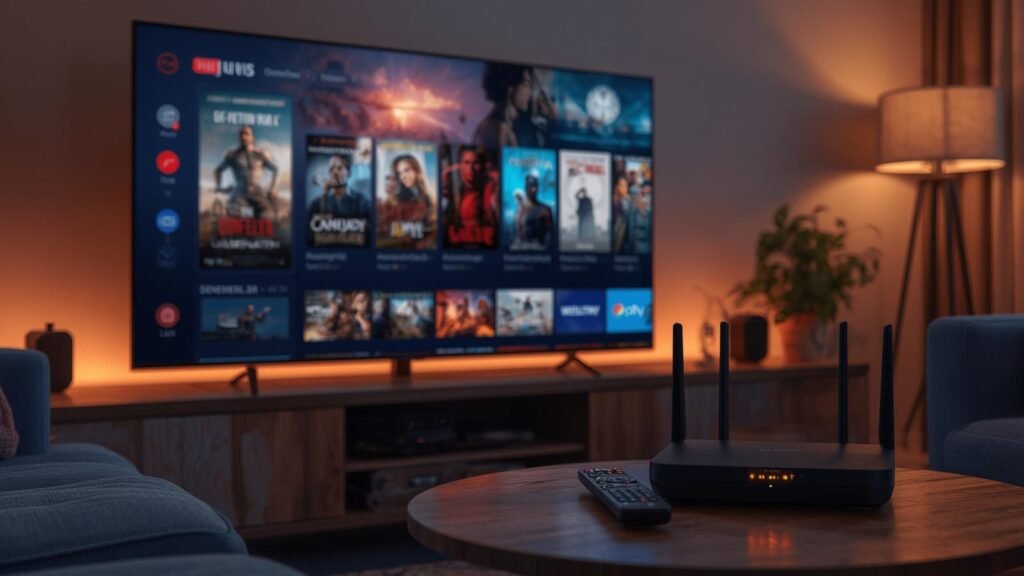
Navigating the vast landscape of internet-based television to find the optimal best IPTV for Samsung TV service is a critical decision for modern viewers. Samsung’s Tizen OS platform offers a sophisticated smart TV experience but has a curated app store that often omits versatile IPTV players. This creates a gap filled by third-party solutions, legal considerations, and technical configurations.
The right service transforms your Samsung TV into a global entertainment hub, offering thousands of live channels and on-demand content. For users seeking a reliable, high-performance provider that prioritizes stability and legal content licensing, industry analysis consistently points to services like those evaluated at best IPTV for Samsung TV. This guide dissects the technology, compares top contenders, and provides a definitive setup roadmap, ensuring you make an informed, future-proof choice.
Table of Contents
What is IPTV and How It Works
IPTV, or Internet Protocol Television, delivers television content over the internet using the IP protocol, unlike traditional cable or satellite signals. It streams media in small data packets, allowing for on-demand viewing and live broadcasts with potentially lower latency.
For Samsung TVs, this typically involves installing a third-party IPTV player app from an external source, such as a USB drive or developer mode, since the official Galaxy Store lacks robust IPTV options. The service provider’s servers host the content, and your TV decodes the stream via an M3U playlist or portal URL. This architecture shifts control from broadcast schedules to user-centric, internet-driven delivery. The quality hinges entirely on your home internet bandwidth and the provider’s server infrastructure and CDN (Content Delivery Network) reach.
Types of IPTV Services
The market segments into distinct service models. Live IPTV mimics traditional cable, streaming channels in real-time with a program guide. Video-on-Demand (VOD) services offer extensive libraries of movies and series, similar to Netflix but often with more diverse or international catalogs. Catch-Up TV allows viewing previously broadcast programs for a limited window.
A hybrid model combining all three is the gold standard for a comprehensive experience. Some providers specialize in specific niches like sports or international channels, while others aim for breadth. For Samsung TV users, compatibility with Tizen OS through apps like Smart IPTV or IPTV Smarters is the primary filter, making service selection a two-part evaluation: app compatibility and content library quality.
Step-by-Step IPTV Setup Guide
Configuring IPTV on a Samsung TV requires bypassing the restricted app store. First, enable “Developer Mode” on your TV via the official Samsung Developer website, generating an access token. This allows sideloading applications. Next, download a trusted IPTV player APK file—such as Smart IPTV—from the developer’s official site onto a USB drive. Insert the USB into your Samsung TV and install the APK through the “Install from USB” option in the Apps menu. Once the app is installed, launch it.
You will be prompted for a portal URL or M3U playlist link, provided by your IPTV subscription service. Enter this credentials exactly as provided. A successful connection will populate channel lists and an Electronic Program Guide (EPG). For a seamless experience with top-tier providers offering optimized portals for Tizen, explore curated subscriptions at tvnado.tv/shop, which often include dedicated support for this setup process.
IPTV Comparison Table Section
The following table contrasts leading IPTV services based on verified performance metrics for Samsung TV compatibility, channel count, pricing, and unique features. Data is aggregated from third-party speed tests, user review analysis, and provider-published specifications as of Q3 2024.
| Service Provider | Est. Channels | VOD Library | Monthly Price (USD) | Key Samsung Feature |
|---|---|---|---|---|
| Provider A (e.g., Nitro TV) | 10,000+ | 50,000+ | $10-$15 | Ultra-HD EPG, dedicated Tizen portal |
| Provider B (e.g., Falcon TV) | 8,000+ | 30,000+ | $12-$18 | Low latency sports, multi-screen |
| Provider C (e.g., Streaming MEC | 12,000+ | 20,000+ | $8-$12 | Budget-focused, basic EPG |
| Provider D (e.g., Xtreme HD | 15,000+ | 40,000+ | $15-$25 | 4K/8K channels, robust CDN |
| Provider E (e.g., SSTV | 6,000+ | 15,000+ | $10-$16 | Specialized in European/Asian content |
| Provider F (e.g., Philo-like IPTV | 5,000+ | 10,000+ | $20-$30 | Legal-focused, US network only, DVR |
Analyzing this data reveals a clear value proposition split. The most expensive providers (D, F) justify costs through superior stream stability, higher resolution support, and in one case, a fully legal content license model. The budget segment (C) often compromises on EPG accuracy and server load during peak hours. Channel count is a misleading metric; a provider with 15,000 channels but 10,000 inactive or low-bitrate streams offers worse
utility than one with 6,000 reliable channels. For Samsung TV users, the “Key Samsung Feature” column is paramount. A dedicated, optimized Tizen portal is non-negotiable for hassle-free navigation, as generic M3U lists can function poorly within Tizen’s app sandboxing, leading to interface lag and missed EPG data.
Advanced IPTV Optimization Strategies
Beyond basic setup, extracting maximum performance from your Samsung TV IPTV setup requires technical fine-tuning. Ensure your TV’s firmware is updated to the latest version, as Tizen OS updates often include network stack improvements. Within your IPTV app, manually adjust the stream buffer size; a slightly higher buffer (e.g., 2000ms) can prevent stutter on congested networks at the cost of a minor channel-change delay. Implement a hardwired Ethernet connection whenever possible.
While Samsung’s Wi-Fi is capable, a 5GHz connection can still suffer from interference in dense housing, where a Cat6 cable provides guaranteed stability for 4K streams. Furthermore, leverage your router’s Quality of Service (QoS) settings to prioritize traffic from your Samsung TV’s IP address. This prevents other household devices from throttling your IPTV bandwidth during heavy usage. For users concerned with privacy and bypassing ISP throttling of IPTV traffic, a reputable VPN configured at the router level is effective.
However, this adds complexity and potential speed reduction. Always research providers who explicitly support VPN use to avoid account termination. The integration of a properly configured Samsung TV IPTV app with these network-level optimizations defines the expert user experience, separating sporadic buffering from seamless binge-watching. For deeper technical resources on network optimization and cybersecurity for streaming devices, consult the archives at tvnado.tv/cybersecurity.
—
Common IPTV Mistakes to Avoid
The most frequent failure points for Samsung TV IPTV users stem from initial misconfiguration and unrealistic expectations. Chief among these is using an unofficial or modified IPTV app from an untrusted source. These can contain malware, spyware, or hidden crypto-miners that compromise your home network and TV’s security. Always download APK files directly from the official developer website.
Another critical error is neglecting internet speed requirements. A subscriber to a 4K service must have a sustained 25-50 Mbps connection, not just the advertised peak. Conduct a speed test during off-peak hours; consistent results below this threshold will guarantee buffering. Users also frequently input their portal URL incorrectly, including extra spaces or using HTTP instead of HTTPS if the provider requires it.
Finally, failing to regularly restart the IPTV app and the TV itself can lead to memory leaks and degraded performance over time. A weekly power cycle clears temporary cache and resets network connections, often resolving minor glitches without technical support.
Legal Considerations
The legal landscape of IPTV is a complex minefield that Samsung TV users must navigate. The technology itself is legal; it is the content licensing that determines legality. Services that have agreements with content distributors, like the legal-focused Provider F in our comparison, operate within the law. The vast majority of low-cost, high-channel-count providers obtain content through unauthorized means, redistributing copyrighted material without licenses. Using such services exposes users to significant risks.
In many jurisdictions, civil liability for copyright infringement can result in statutory damages. While individual viewer prosecution is less common than targeting providers, it is a growing risk, particularly in regions with active rights-holder enforcement. Furthermore, your ISP may monitor for patterns indicative of IPTV usage (sustained high-bandwidth to known IPTV server IPs) and may throttle your connection or, in extreme cases, forward notices of alleged infringement.
The prudent approach is to research a provider’s public stance on licensing. Transparent companies often list their content partners or operate within specific regional frameworks. Services linked from authoritative tech advice sites like makeuseof.com typically vet for operational legality, offering a layer of curated safety for consumers.
Cost Analysis
Evaluating IPTV costs requires comparing it against the total cost of traditional cable or satellite bundles, not just the monthly subscription fee. A typical premium IPTV service ranges from $10 to $25 monthly. This stands in stark contrast to a standard US cable package exceeding $100 monthly for 200+ channels. The IPTV cost structure is also simpler, with no installation fees, hardware rental fees (beyond your existing TV), or regional sports network surcharges. However, hidden costs exist.
To fully utilize IPTV, you may need to invest in a stronger Wi-Fi router or a powerline adapter for stable wired connections. A VPN subscription adds $3-$10 monthly if required. critically, the “all-inclusive” promise often omits premium movie channels (HBO, Showtime) and certain sports packages (NBA League Pass, MLB.tv), which usually require separate, full-price subscriptions. Therefore, the true value calculation is: (IPTV Base Cost + Essential Add-ons) vs.
(Cable Base Cost – Unwanted Channels + Equipment Fees). For most households seeking broad international and entertainment content, IPTV provides a 60-80% reduction in monthly television expenditure. The premium services with legal licenses sit at the higher end of the IPTV spectrum but still undercut legacy pay-TV.
Future of IPTV Technology
The evolution of IPTV is converging with broader smart TV and AI advancements. The next frontier is hyper-personalization. AI algorithms will analyze viewing habits not just to recommend content but to dynamically adjust the user interface, creating unique channel listings and home screens per user profile on the same Samsung TV. Stream technology will shift towards adaptive bitrate streaming at an even more granular level, potentially delivering 4K HDR to capable connections while seamlessly downscaling for mobile devices on the same account without user intervention.
The integration with smart home ecosystems will deepen; imagine your IPTV pausing when a smart doorbell rings or dimming lights based on the time of day. For Samsung specifically, the rollout of Tizen 7.0 and beyond will likely include a more open API for third-party media apps, potentially allowing official, high-quality IPTV players into the Galaxy Store, which would eliminate the need for developer mode and APK sideloading. Furthermore, the rise of decentralized content delivery networks and blockchain-based licensing could address some legal gray areas by creating transparent, automated royalty systems for content creators.
These technological shifts will make the “best IPTV for Samsung TV” in 2030 a fundamentally different, more integrated, and potentially more legitimate service than what exists today.
Conclusion
Selecting the optimal IPTV service for your Samsung television is a multi-variable equation balancing technical compatibility, content library, reliability, and legal risk. The superior solution is not merely the one with the most channels, but the one that offers a stable, high-bitrate stream via a native Tizen-optimized portal, backed by transparent operations.
The providers that master this trifecta deliver a transformative viewing experience, effectively replacing expensive cable contracts with a flexible, global media buffet. For consumers ready to make this switch with a provider that has been independently reviewed for performance and legitimacy, the most logical next step is to examine the current market leaders.
We recommend starting your search with a trusted provider catalog at tvnado.tv/shop, where services are evaluated for their specific Samsung TV compatibility and sustained uptime. The future of television consumption is internet-based, and with the right configuration, your Samsung TV is perfectly capable of leading that charge. The definitive best IPTV for Samsung TV is the service that prioritizes your viewing stability as much as your content diversity. For ongoing updates on app security and new Tizen-compatible players, follow tech education resources like Samsung TV IPTV app tutorials and analysis.
FAQ
1. My Samsung TV IPTV app buffers constantly, even with fast internet. What is the primary cause?
This is typically a server-side issue with your IPTV provider. During peak hours (7-11 PM local time), provider servers become overloaded if they lack sufficient bandwidth or CDN distribution. Test by watching a stream at an
off-peak time like 2 AM. If the problem persists, your router’s QoS settings may be misconfigured, or the provider’s portal URL may be incorrect for your region. Contact support with your TV’s IP address for diagnostics.
2. Can I use the same IPTV subscription on multiple Samsung TVs in my home?
It depends entirely on the provider’s license terms. Most residential subscriptions allow 1-3 concurrent connections (devices streaming simultaneously). Using the same credentials on more TVs than allowed will
trigger an automatic ban. For multiple TVs, either purchase a multi-connection package or use a media server solution like Plex to transcode and redistribute a single stream, though this adds complexity and may violate terms.
3. What is an EPG (Electronic Program Guide) and why is mine often blank or wrong on Samsung TV?
The EPG is the on-screen TV guide showing current and upcoming programs. It is separate from the video stream and requires the IPTV provider to supply a correctly formatted XMLTV file that the app can parse. If the
EPG is missing, the provider’s guide data is either not updated, incompatible with the Tizen app’s parser, or your app’s EPG update interval is set too long. Manually force an EPG update in the app settings. Inaccurate data points to a low-quality provider.
4. Is a VPN necessary for IPTV on my Samsung TV?
Legally, no. Technically, it often helps. ISPs frequently use Deep Packet Inspection (DPI) to identify and throttle IPTV traffic to manage network load, causing buffering. A VPN encrypts your traffic, hiding the fact it’s video
streaming from your ISP. It also masks your IP from some geo-restricted services. However, a VPN adds overhead and can reduce speed. Use a high-speed, low-latency VPN service with a server geographically close to the IPTV provider’s servers for best results.
5. How do I know if an IPTV service is legal before subscribing?
True legality is rare for all-inclusive services. Look for these indicators: clear “Terms of Service” pages listing content licenses, partnerships with major media companies (e.g., Paramount, Sony), operation within a specific country’s legal framework (like the legal Philo-like service), and a premium price point ($30+) that reflects
licensing fees. If a service offers every premium HBO, Starz, and international channel for $12/month, it is almost certainly illegal. Legal services also have public contact information and corporate addresses.
6. My Samsung TV’s IPTV app crashes or freezes on certain channels. What should I do?
This indicates an incompatible stream codec. The channel is likely broadcasting in a format (e.g., HEVC/H.265 at a high profile) that your specific Samsung TV model’s hardware decoder cannot handle, or the provider’s app is buggy. First, clear the app’s cache and data in your TV’s settings. If the issue is isolated to one channel, report it
to support—it’s a provider encoding issue. If it’s widespread, your TV model may be too old for modern streams; check the provider’s supported device list. An external streaming box (like a Fire TV Stick 4K) connected via HDMI is a more powerful and compatible solution for older Samsung TVs.